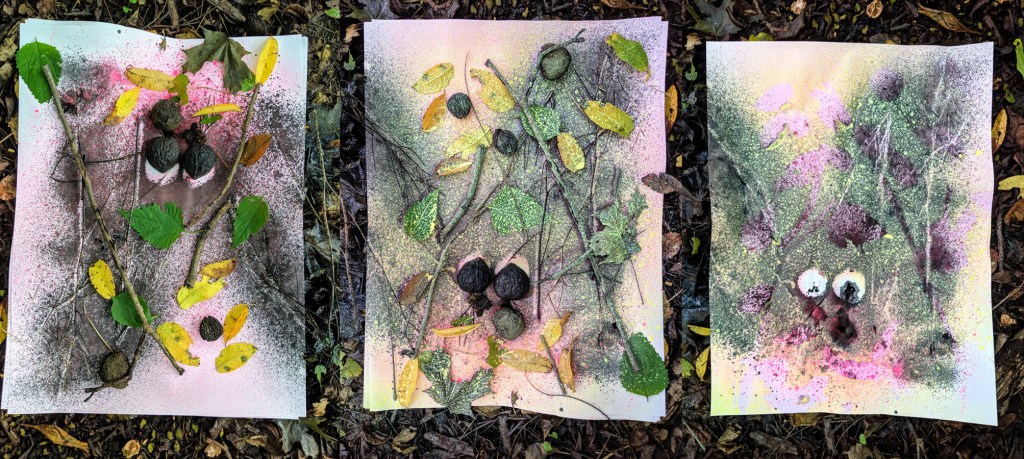
Decomposition: Beech, White Oak, Black Oak, Black Walnut
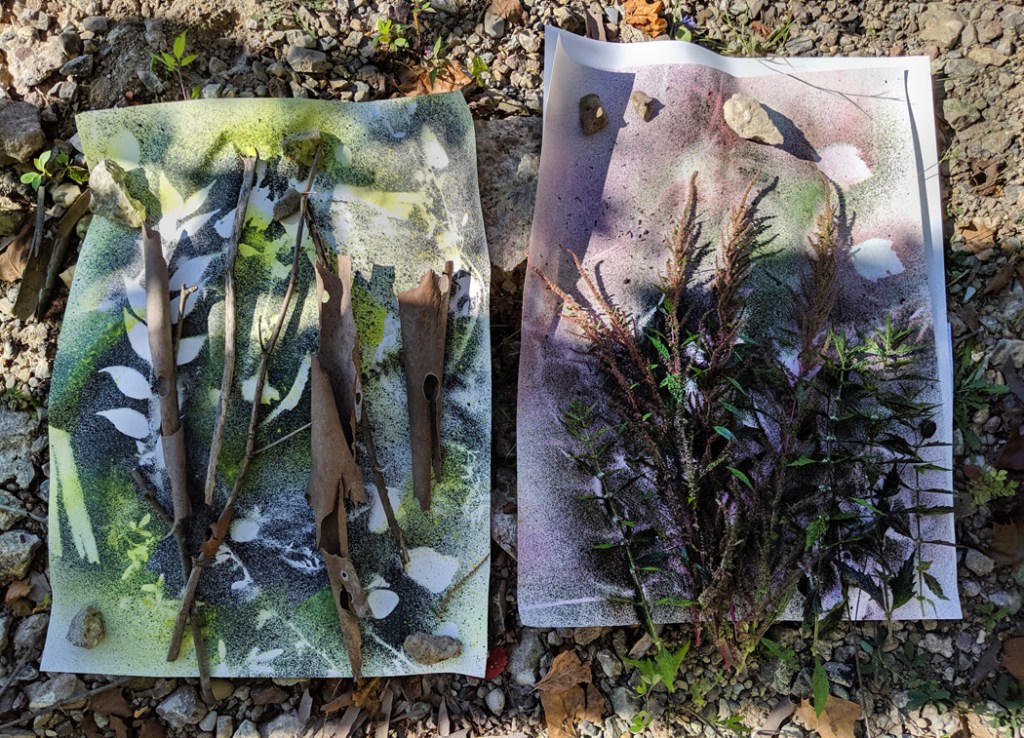
Covering and uncovering these paintings encapsulate our quiet moments of gathering. Meandering from the main trail and returning at a later time develops our familiarity with previously unmarked spaces. The paper ground indexes specimens for identification purposes, while fluid materials give way to chance and an alchemically hypnotic element of surprise.
Seeing breath: Video performance. Created during the early onset of the Pandemic, 2020.
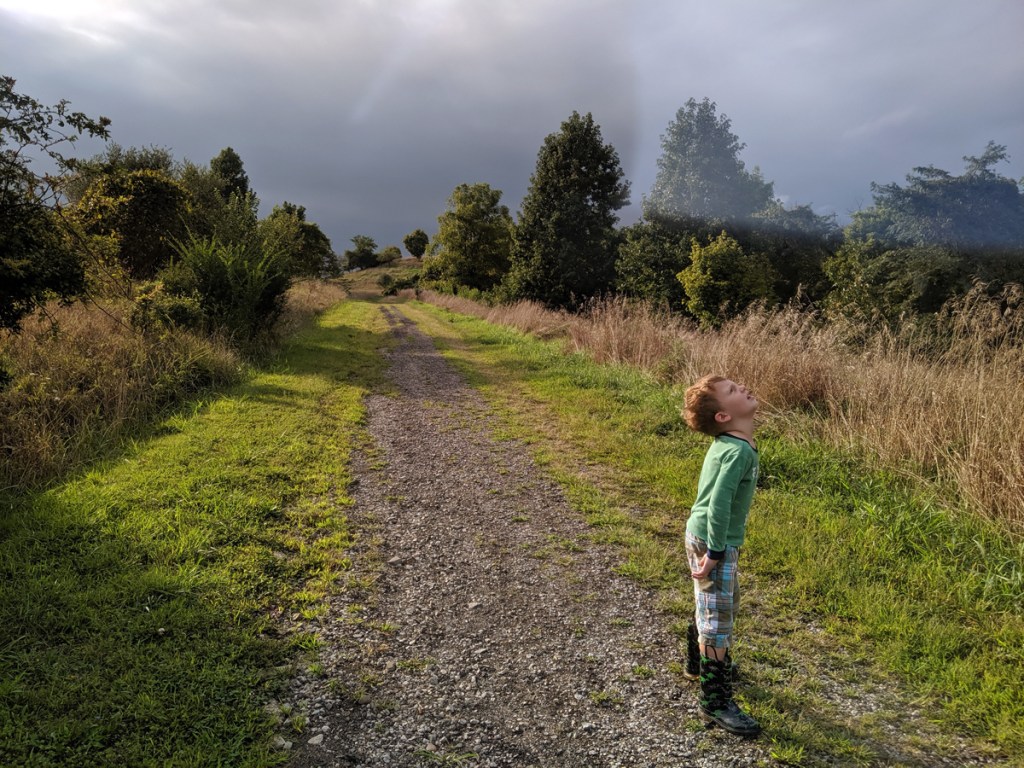
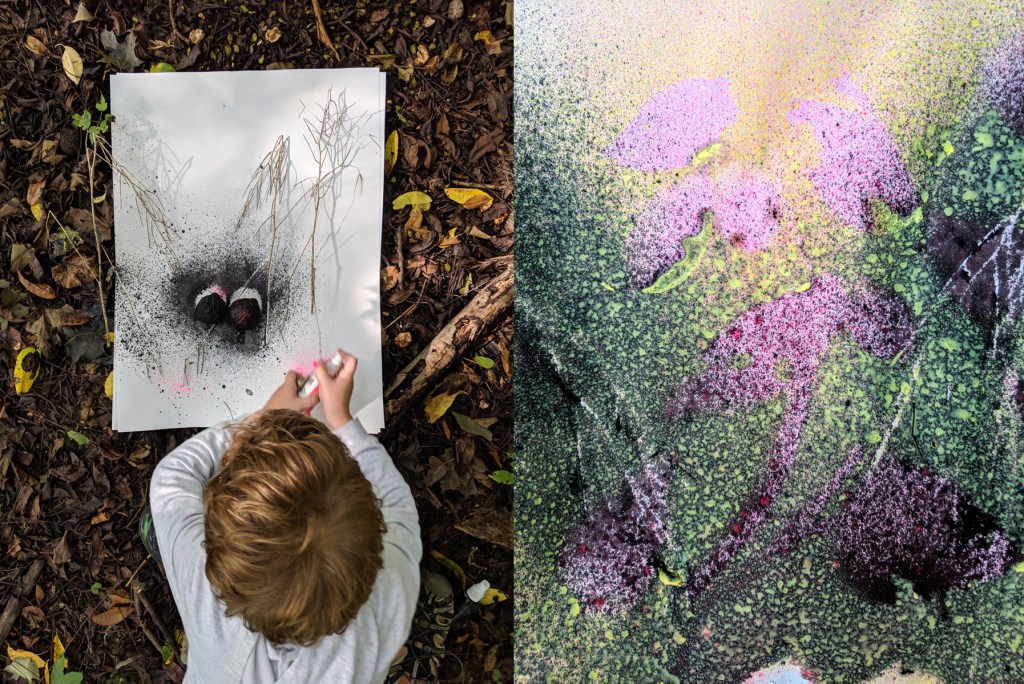
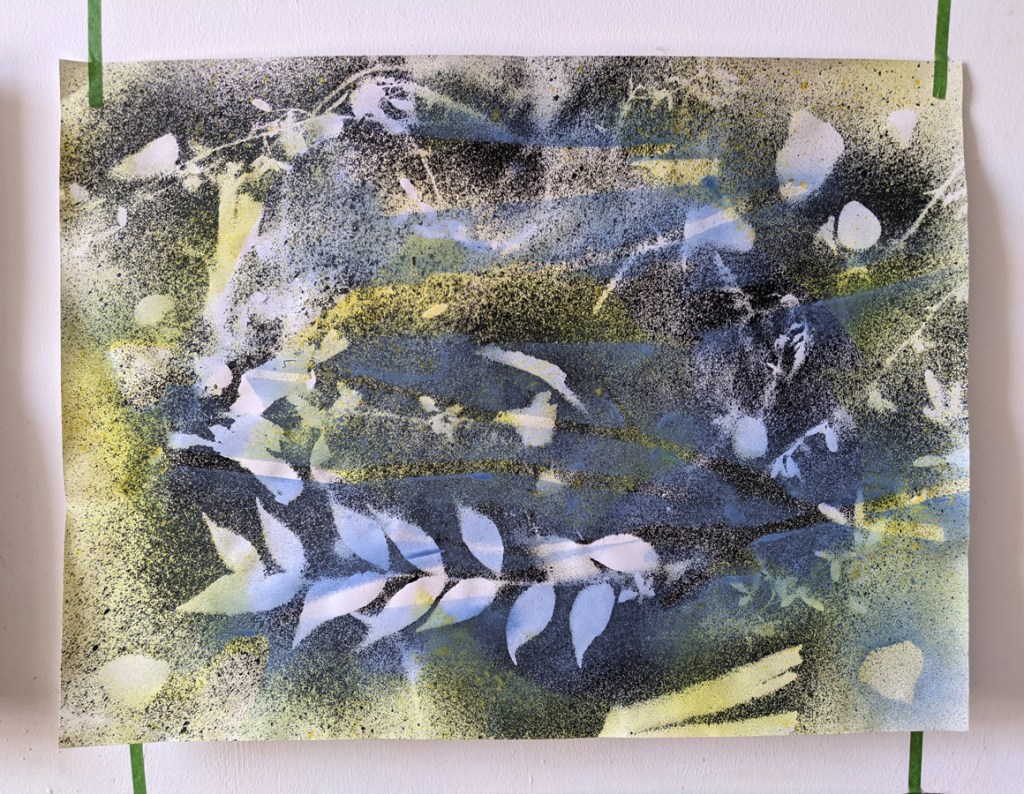
Arlo studies the storm clouds along our path to determine how long we have until it begins to rain. It is the golden hour. We spray misted our colors wet on wet to achieve gradient mixtures of colors, and also waited for layers of ink to dry before applying new ones.
GROUND WORK: Gives us a deeper engagement with the textures and smells of the landscape, as we slow down and pay close attention to our environment from a low vantage point. Each paper surface indexes a site with the decomposition of surrounding matter; seeds, sticks, pods and berries.
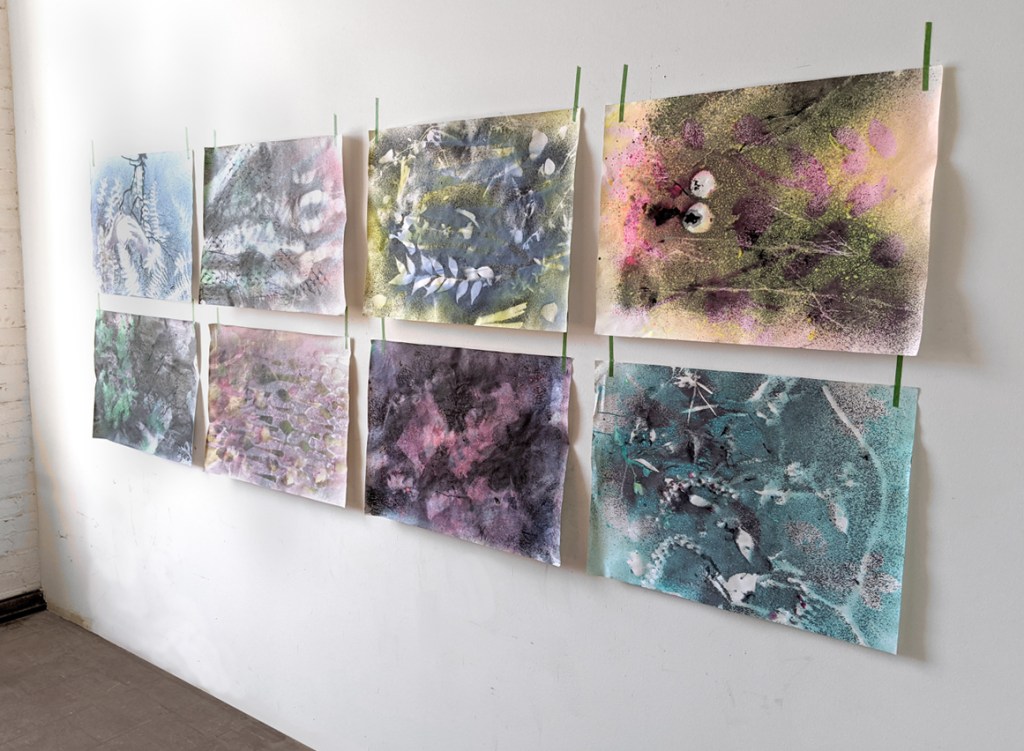
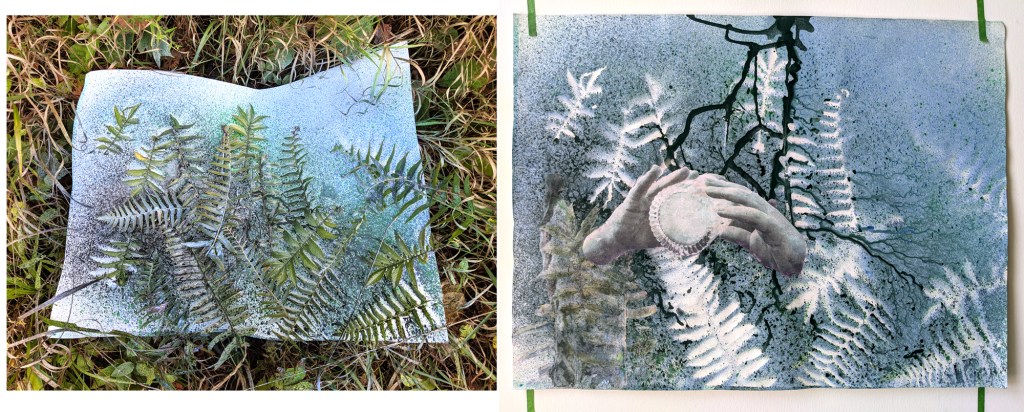
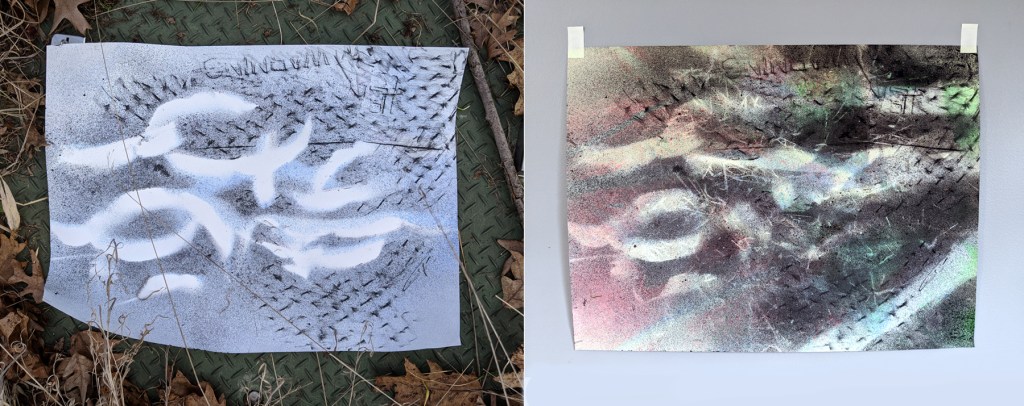
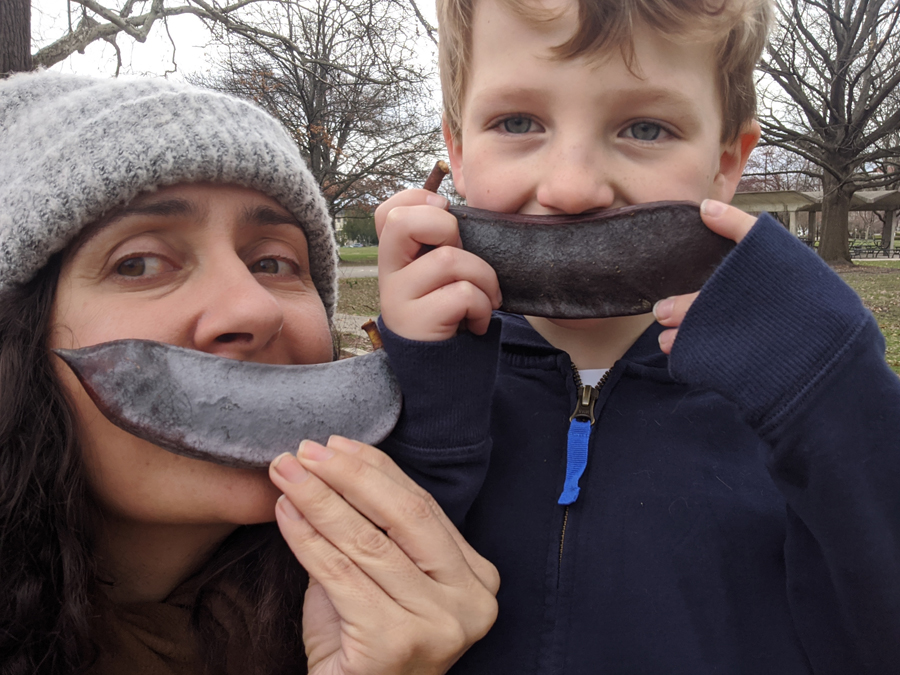
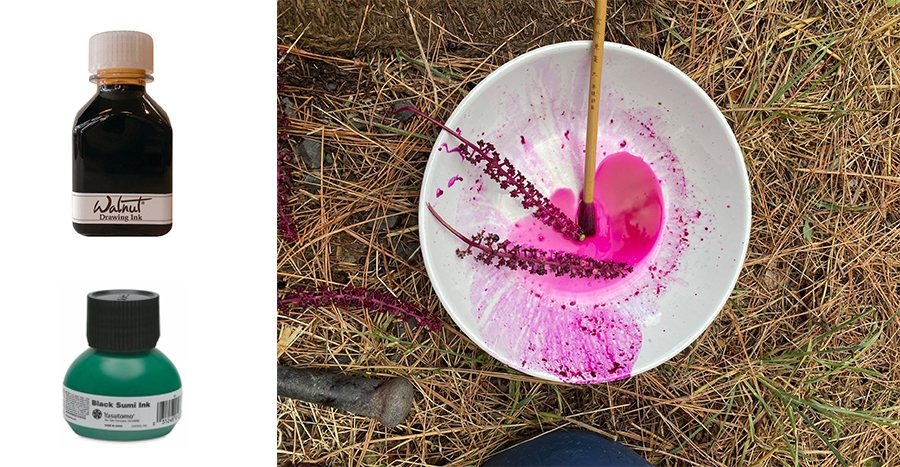
Gallery installation view. Forest floors capture four summer walks. . Twin river bank paintings during the covering phase. We bring the ferns to the self-regulating experience of drinking from a glass. The forest floor becomes a collage on the right. In the center, an image of Arlo’s drinking glass gesture is transferred to the paper. Seed pods from a Kentucky Coffee tree, with rubbing of utility door just off the path. Seed pod smiles.Natural and non toxic inks can be created with plants, but they may not hold their color. I’ve used beet juice or powder, and sumac berries to create fuchsia color. Walnut ink is made from fermented black walnuts and is native to Appalachia. Sumi ink is bio degradable. Yarrow flowers and turmeric can create a variety of orange or brownish yellows.
 iwishiwaslight