“Who gets the next pancake?” has become a Thursday night salutation in our home, since the pandemic began. These family rituals make being together even more special. It’s an echo from my childhood, my dad would make pancakes on the weekends and before we could raise our sleepy heads his twice espresso-ed voice would sing from the kitchen “who gets the next pancake?” My sister and I would leap and bound from our beds and thunder down the hall yelling “me! me!”
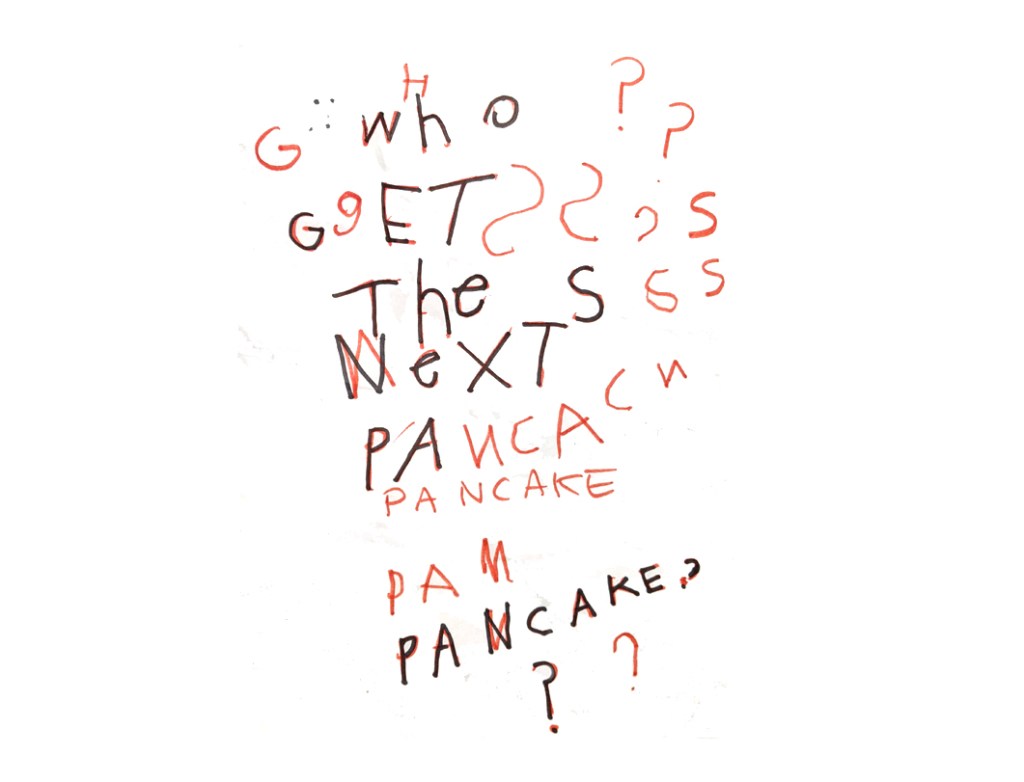
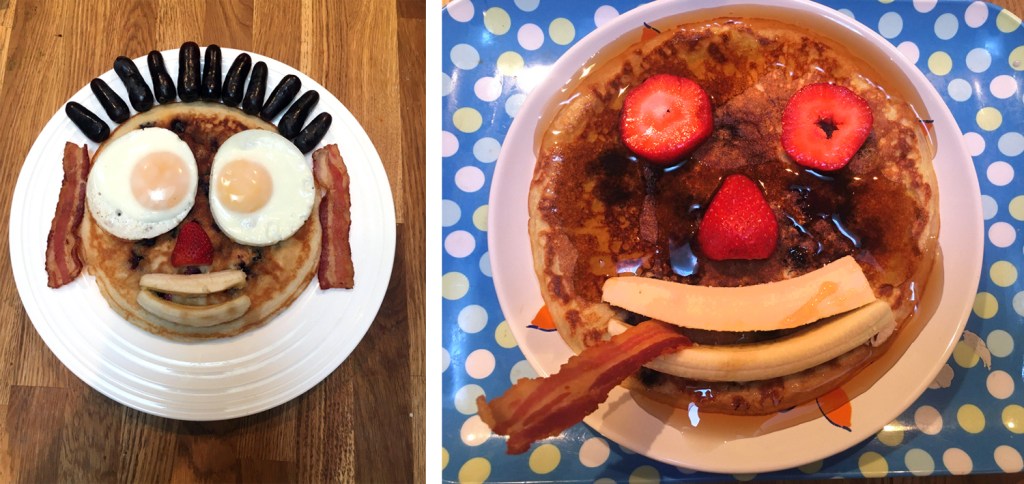
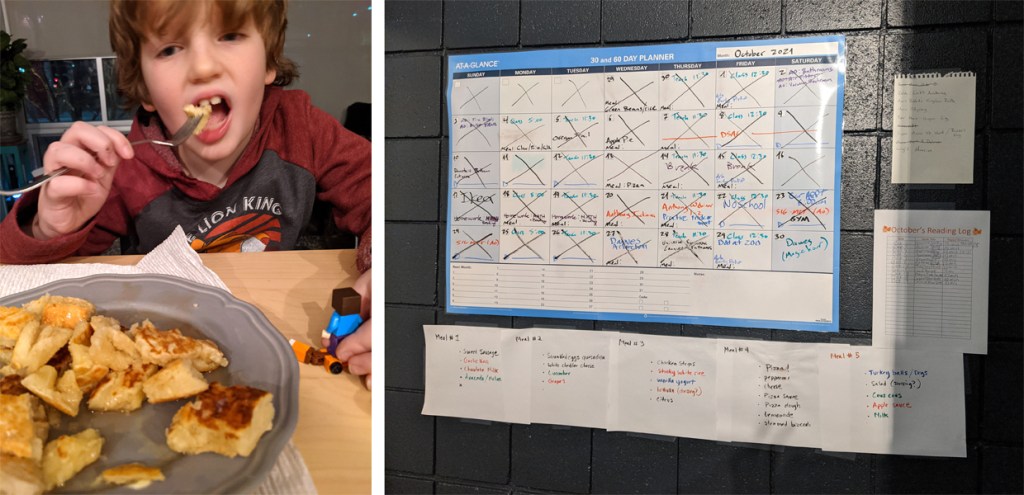
For us, improvisation has become this integration of life and art. I wouldn’t go as far to describe what we do as “homeschooling”. The education that Arlo was getting in pre-school and first grade did not excite him, so we use language such as “art” and “studio” instead of “studying” and “work”. I often lamented dropping him off in a place that didn’t seem as prepared to engage his interests and agency as much as I would like. Being at home with Arlo has given us time to follow his curiosities, free from constant transitioning. We have nourished, as a result, a richer inner life.
Some maps are magical
Me: Arlo, will you create a map of Columbus?
Arlo: Mom, my maps are not of Columbus, they are magical maps.
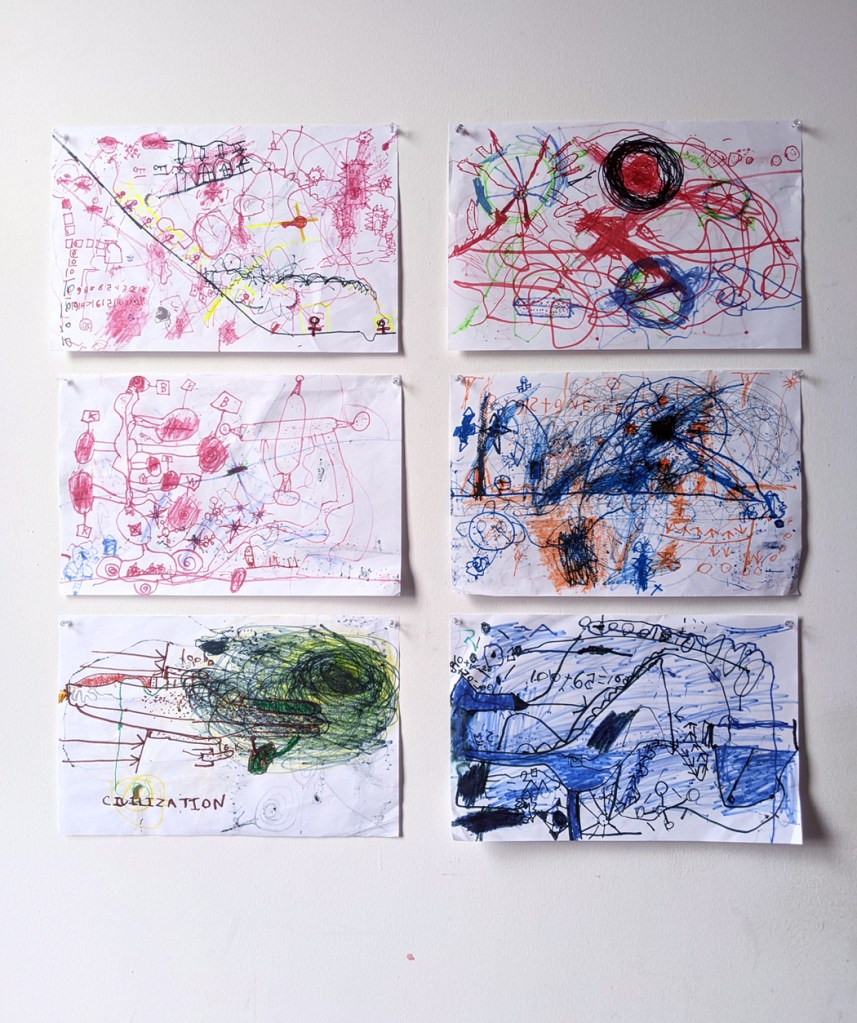
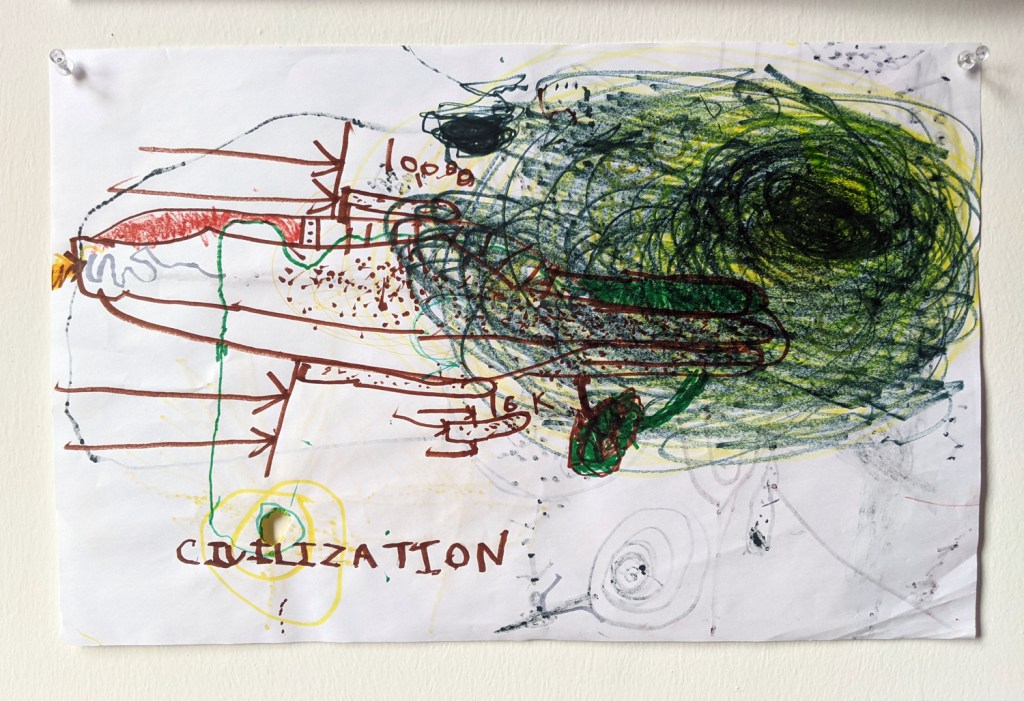
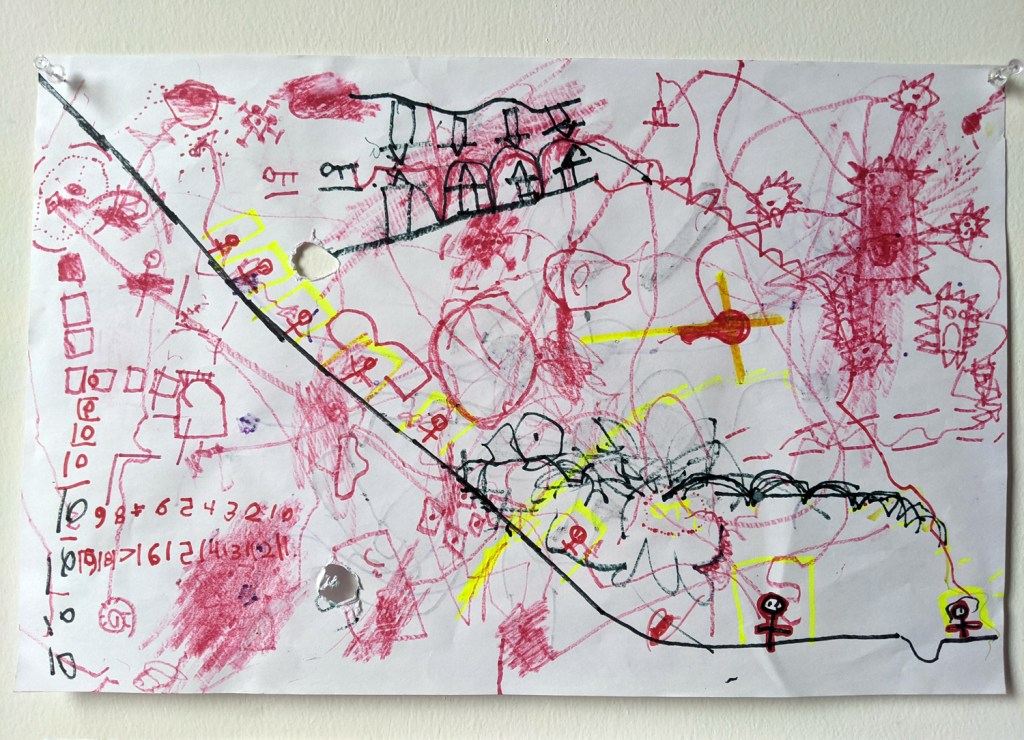
Line speed, variation, width, and weight guide the eye and hand, like a score that can be replayed in infinitely different ways. The gestural thinking does engages meaning beyond icon, symbol or text. There is no finish line or point of completion, the arrow keeps flying.

Self-regulation
I want to address self-regulation for a moment. This idea was lost on me for years, as a learner, an art teacher, and then later when I become a mom. My sense of self-regulation as an artist practitioner was build upon some romantic ideals embedded in western traditions of fine arts practice. This was my training. Some of these ideals include extreme individualism, exhaustive processes that exploit resources, and thrive on self-sacrifice. None of this is sustainable for learners or practitioners and can result in early and mid career burnout.
Self-regulation is an act of self-love, whereas the artist can check in with themself repeatedly throughout the day, and the space where they are practicing giving way to a continuous reshaping of process. In a collaborative learning space, we are not only regulating ourselves, but we are maintaining interdependency with our peers, resources, networks, and teachers.
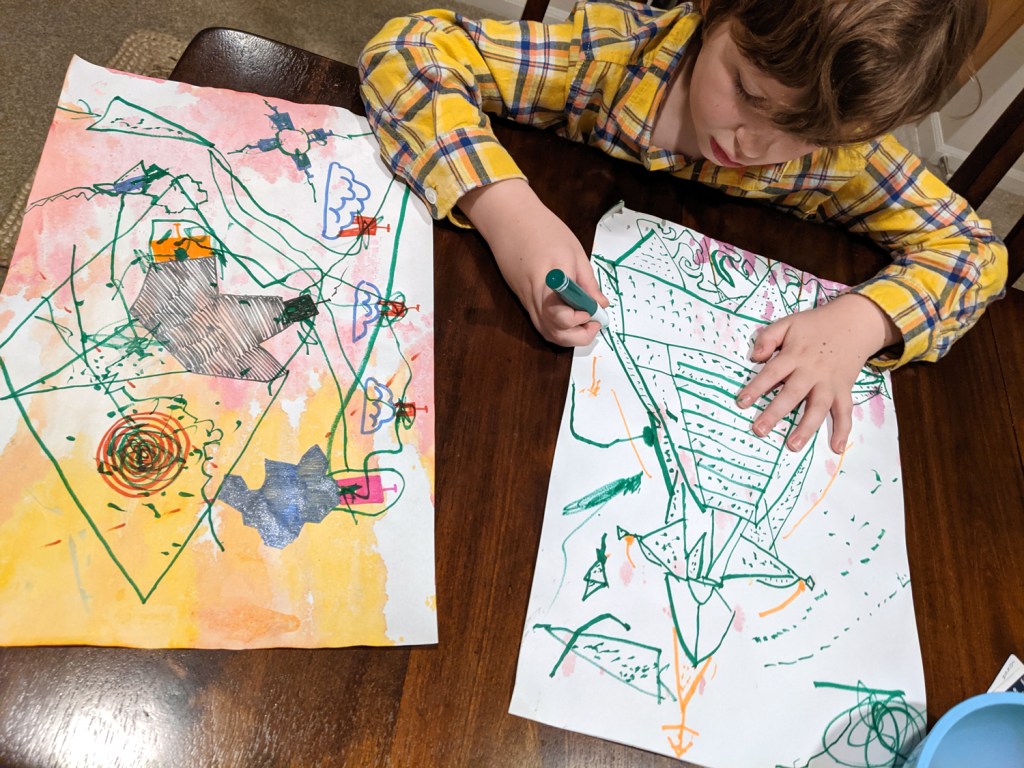
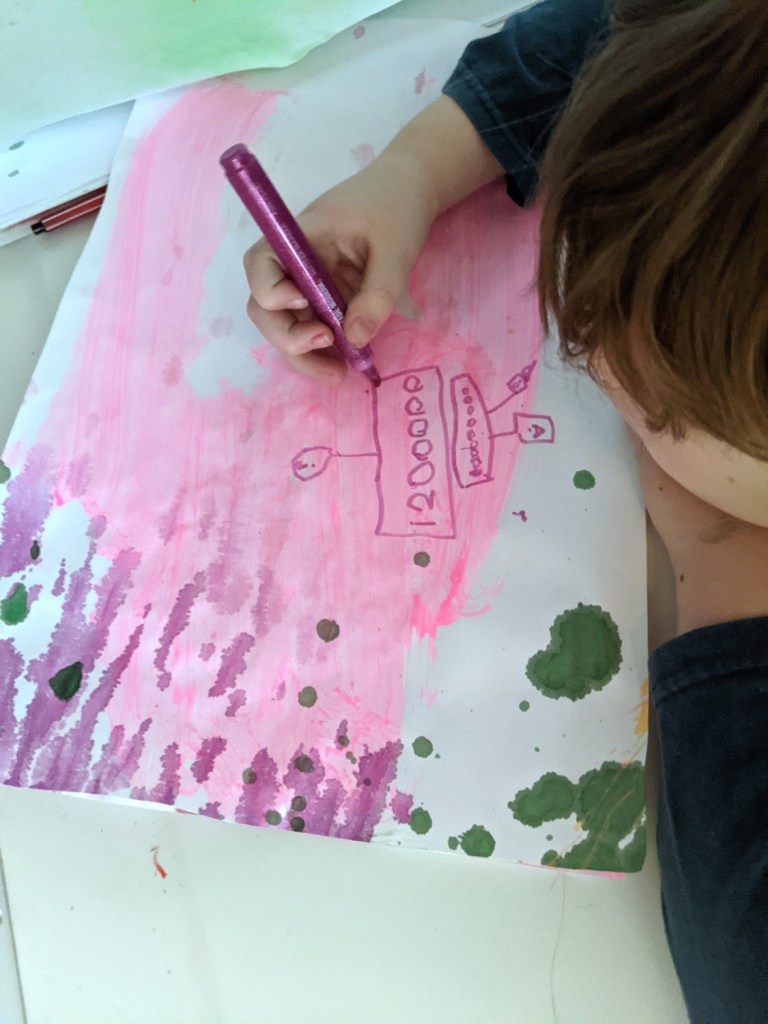
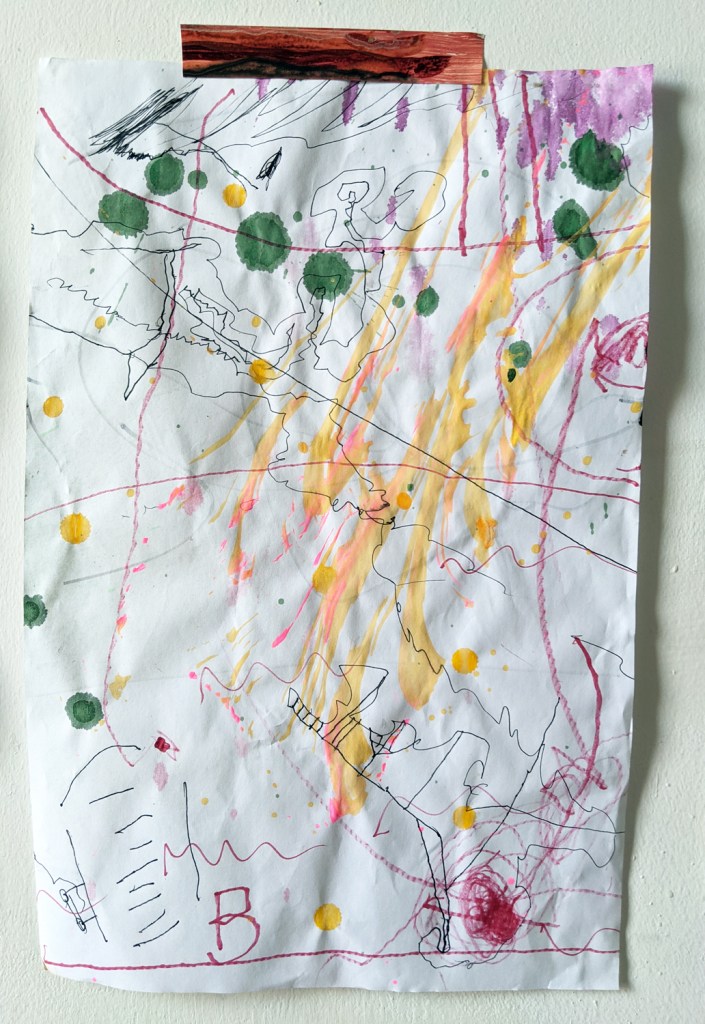
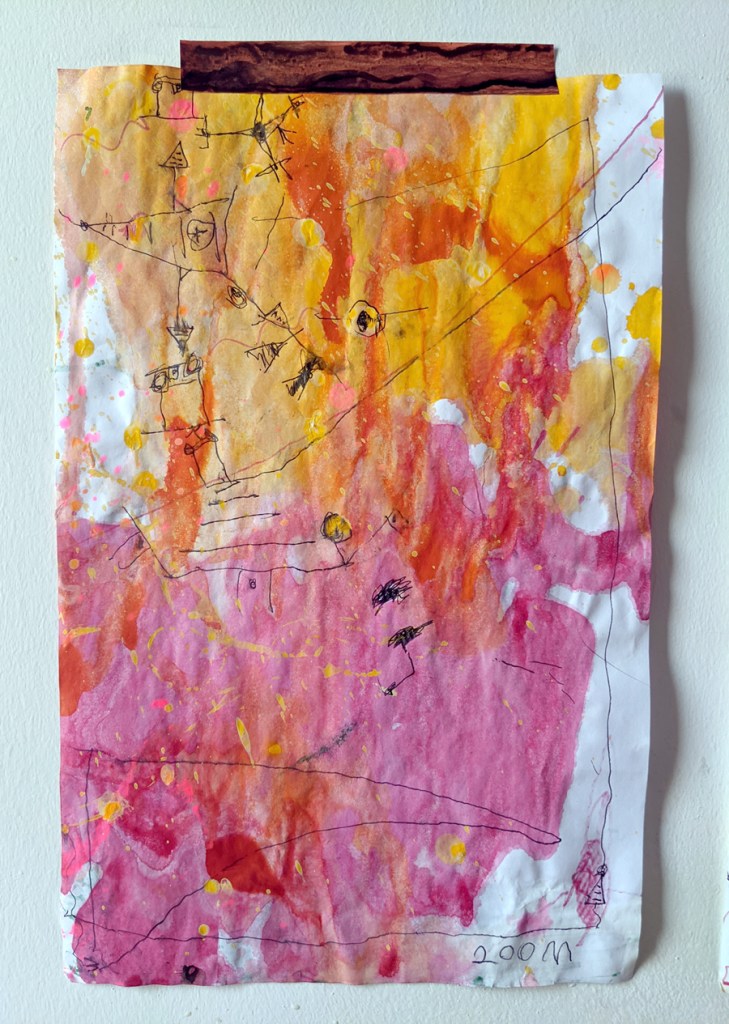
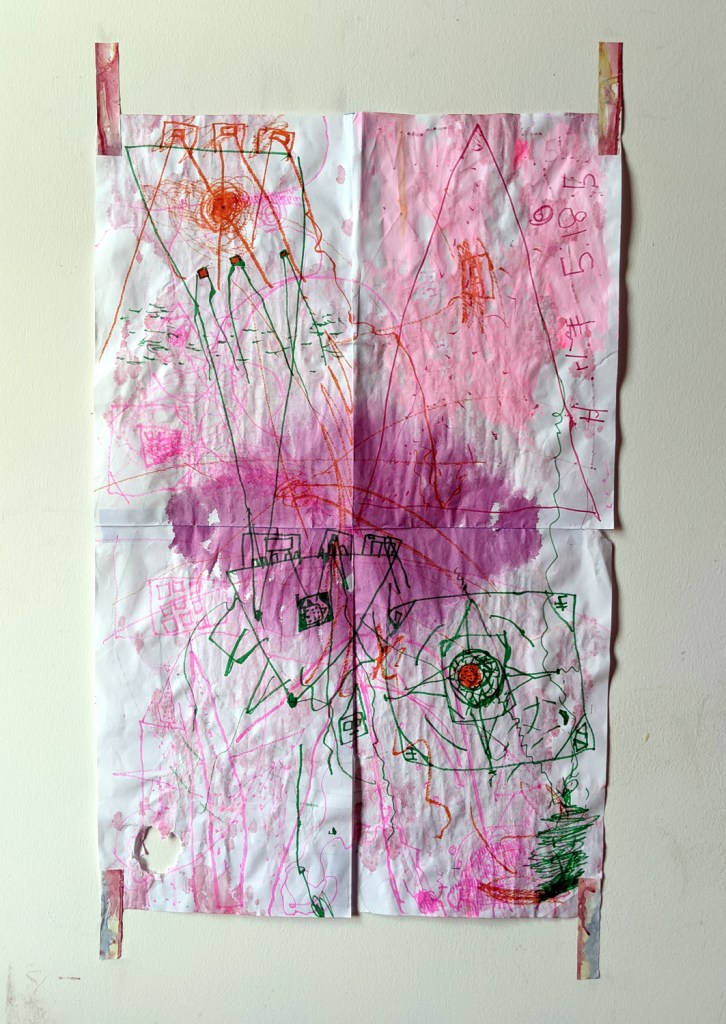
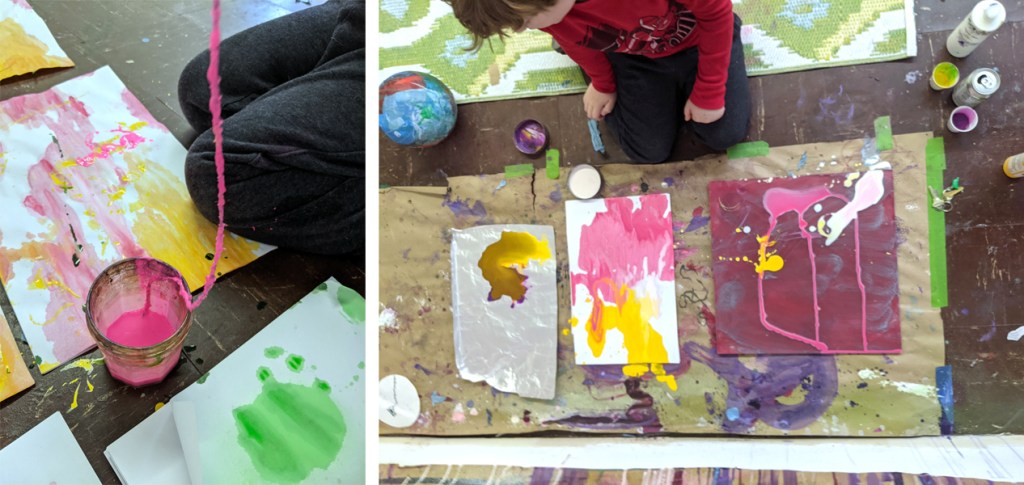
Universal Design for Learning: Learning at home has been enriching due to the UDL framework, and it’s principals that apply differentiated instruction – an approach that tailors instruction to Arlo’s learning needs. Rather than thinking about myself as the expert, I create flexible environments where Arlo has access to a variety of means of expression. This idea of flexibility connects to learner variability which explains that all learners connect differently depending on their relationship with the learning tools, and physical location. If the learning environment and instructor is sensitive to this dynamic, then different points of access, in various materials, and forms can be made accessible. Accessibility is not just a physical idea, connoting mobility, architecture, or design, it is also about the emotional connections that learners make with information, learning community and space. In these images below, Arlo is provided with multiple means and materials.
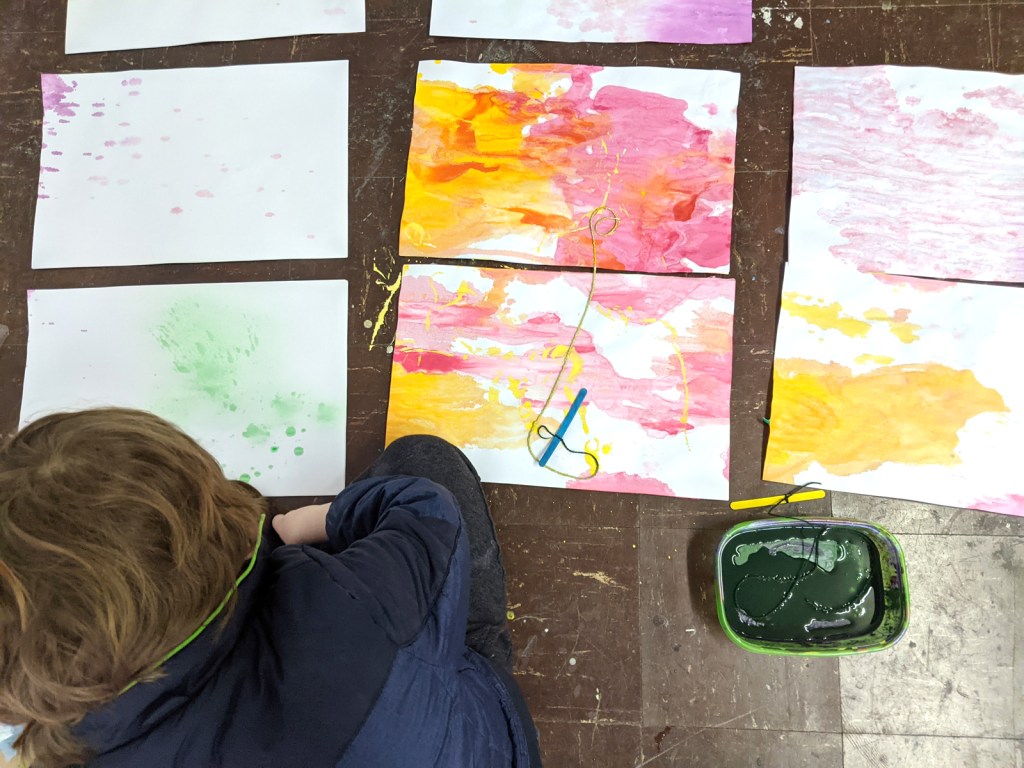
Arlo pours paint on multiple sheets of stacked paper. As they dry they are pulled apart. He drags yarn dipped in paint to create lines. After they dry overnight, he works back in with ball point pens, felt tip pens, and crayons.
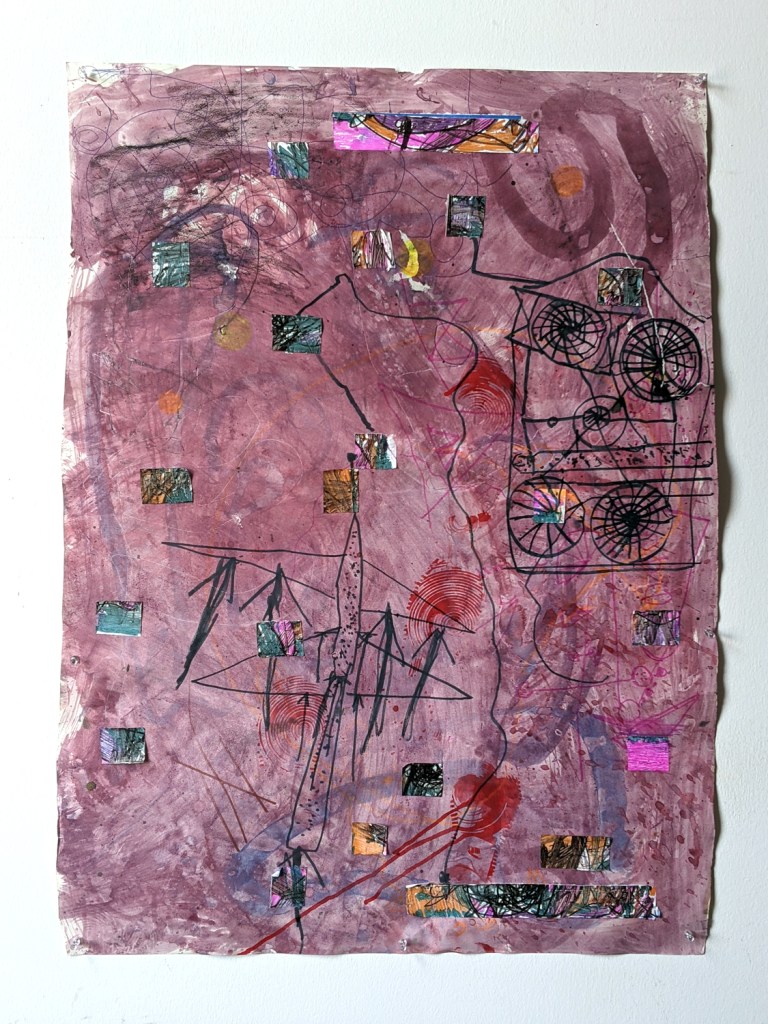
Flying Rocket was created in multiple stages. Arlo painted and drew with markers on artist tape. When it dried he cut the strips into smaller pieces and placed them as miniature worlds into the larger composition. Look closely and you will red prints from the soles of his sneakers.
The best day at school
The best day at school is when there are more playgrounds.
Maybe there should be a climbing place and a gym too, with some bikes.
The best day at school is when we could have three kids in each classroom.
Occasionally we could have three other kids to come in and play.
They should like the group’s topic, like the topic for the group is what every kid likes.
They could be “space” kids.
The best day at school is when there is a dancing room, and an art room.
Advanced kids who know a lot about art can teach there.
So, the kids don’t think the grownups know more than them.
The best day at school is when the kids who had to stay home because they were sick.
Can come to the other kids when they are not sick.
and the other kids can tell them about the party and everything that happened
Those kids can teach them.
The best day at school is when we can all be allowed to bring our toys and games
and we can also play together with the blocks and maybe have some ice cream.
We would be able to choose our courses
The people who cannot choose their courses will have no fun
I want to be able choose my own course.
Sometimes you get other people’s choices for courses, and sometimes you get your own.
The best day at school is when the teachers in the public school can go to private schools and learn a lot more because they have more money.
Then they can come back to the public school and spread their ideas around.
A collaborative poem by Arlo and Lori
 iwishiwaslight